
The Loop Method
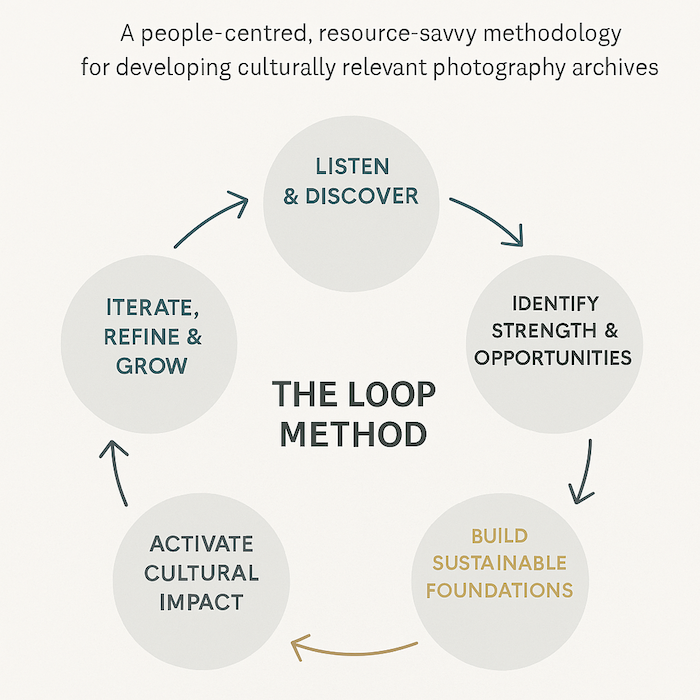
Listen & Discover
Understand the lived experience, values, needs and ambitions of the community and stakeholders.
Activities include:
Community conversations
Collection walk-throughs
Values mapping
Assets inventory (ABCD approach)
2. Identify Strengths and Opportunities
Find out what’s already working, what’s underused, and what can grow.
Focus areas:
Current collection strengths
Gaps and risks
Cultural significance
Early wins
Potential partnerships & funding routes
3. Co-create development pathways
Work collaboratively to design practical and strategic next steps using Design Thinking.
Outputs include:
Prioritised roadmap
Cataloguing or digitisation framework
Engagement plan
Volunteer/Trustee capacity plan
Funding strategy
Develop systems, workflows and capabilities that strengthen long-term resilience.
Examples:
Workflow design
Documentation
Governance structures
Training and mentoring
Grant-writing support
Licensing & income streams
4. Build Sustainable Foundations
Transform the archive from a passive collection into a living resource.
Activities include:
Exhibitions
Storytelling
Online experiences
Community workshops
Educational materials
Partnerships with cultural organisations
5. Activate Cultural Impact
Evaluation and adjustment ensure the archive evolves sustainably.
Review milestones
Track engagement
Develop new opportunities
Plan for scale
Sustain community involvement